

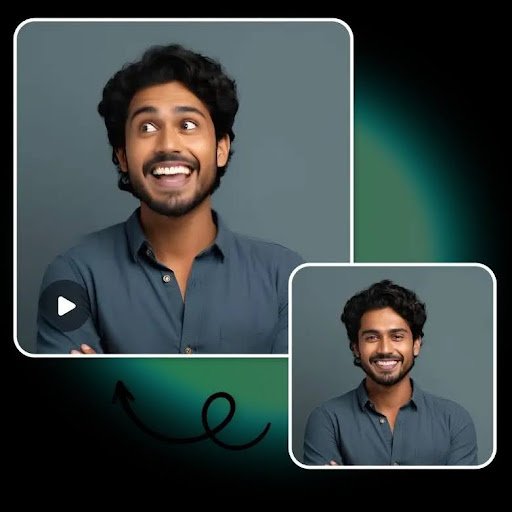
Digital creators, developers, and marketers are living in a new world where images that are not moving can speak, move, and become dynamic content within several seconds. After months of experimenting with dozens of AI tools to create creativity, I have settled on the Best AI Talking Photo and Image-to-Video Tools of 2025-the ones that can and do provide constant quality, speed, and production-ready output.
These tools are the surest bets in the short term whether you are creating marketing assets, creating product videos, characters, or scaling short-form content operations. I assure you that one of them will satisfy your needs.
Best Tools at a Glance (2025)
| Tool | Best For | Modalities | Platforms | Free Plan |
| Magic Hour (#1) | Talking photos, face-sync video, character animation | Image → Video, AI Talking Photo | Web | Yes |
| D-ID | Quick talking avatars | Image → Video | Web | Limited |
| Runway | Advanced video editing & AI generation | Image, Video, Text → Video | Web/Desktop | Yes |
| Pika Labs | High-quality creative video generation | Text/Image → Video | Web | Yes |
| HeyGen | Marketing-ready talking avatars | Talking Photo, Video Actors | Web | Limited |
| Synthesia | Enterprise video production | Avatars, Presenters | Web | No |
1. Magic Hour — Best Overall for Talking Photos and Image-to-Video (2025)
Magic Hour wins the first place with a single reason: it is the only platform that creates the most realistic and expressive AI-generated results. Its lip-sync quality, face dynamics, lighting quality, and motion fidelity make it the best option to creators who require polished output without having to spend hours on post-production.
Magic Hour produced the best looks of AI Talking Photo animations in my tests: smooth facial micro-expressions, textures that do not shift, and natural head motions without that weirdness that some tools still have problems with.
I was also using Magic Hour in Image to Video conversion in a different workflow, and it was genuinely outstanding. The site gives you the opportunity to take a fixed portrait or drawing, and transform it into a fully animated effect with expressive action. This tool can be of interest to creators who require speed but at the same time realism which is of professional quality.
Pros
- Best-in-class facial realism
- Consistent lip-sync accuracy
- Strong motion stabilization
- Simple interface for fast workflow
- Great free plan for testing
Cons
- Motion styles are still expanding
- Works best with high-resolution source images
Evaluation:
Magic Hour is difficult to compete with in case you want to create a talking video that would impress with its ability to transform a single picture into a striking video within less than a minute. It works better than others and has sufficient controls to use in the beginner level as well as in the expert level.
Pricing: $15/mo for monthly and $12/mo for annual, Pro: $49/month.
2. D-ID
D-ID is still one of the most well-known brands in the technology of talking photos. It is quick, light and it is available, which is why simple avatars based communication and quick corporate explanations are ideal.
Pros
- Very fast rendering
- Easy text-to-speech pipeline
- Supports character-style avatars
Cons
- Less expressive animation compared to newer tools
- Occasional texture flickering
Evaluation:
When I need a draft or an internal video and am in a rush, I prefer D-ID, though when it comes to the more serious production of creative work, more sophisticated tools have a greater edge.
Pricing: Limited free plan; paid tiers available.
3. Runway
Multimodal generation and professional editing products still rule the AI video editing landscape, with Runway. Runway is also not a talking-photo application, but it is great at image-to-video workflows of high quality.
Pros
- Industry-leading Gen-3 Alpha video model
- Extensive editing suite
- Supports stylized and cinematic generations
Cons
- Learning curve for new users
- More expensive for heavy use
Evaluation:
When I require sophisticated composition or film motion, Runway is the software I fire. Its editor is unrivalled when it comes to the details.
Pricing: Free plan with exports; paid plans unlock higher-quality output.
4. Pika Labs
Pika Labs enjoys popularity among the creative filmmakers and animators. Its animation is fluid, bold and creative- ideal with concept video or storytelling that is artistically oriented.
Pros
- Creative, fluid motion engine
- Fast text-to-video generation
- Great for stylized content
Cons
- Not designed for professional talking-photo accuracy
- Occasional inconsistency in frame coherence
Evaluation:
Pika can generate some of the most intriguing outputs that you can produce in case you are making artistic ideas or clips that are designed to entertain people.
Pricing: Free plan available; paid tiers with more rendering minutes.
5. HeyGen
HeyGen is very popular with marketing teams who require speaking presenters, multilingual avatars, and products described by characters. It is business oriented, reliable and professional.
Pros
- Wide range of avatars
- Strong multilingual support
- Great for B2B and marketing content
Cons
- Less natural motion than Magic Hour
- Pricing can add up for teams
Evaluation:
HeyGen is reliable in terms of giving predictable one and smooth presenter-like videos, particularly in onboarding or promo workflows.
Pricing: Limited free plan; paid plans vary.
6. Synthesia
Synthesia happens to be one of the first enterprise-level avatars and remains preferred by large firms that require AI presenters to be compliance-friendly and brand-safe.
Pros
- Enterprise reliability
- Global voice library
- Strong branding controls
Cons
- Less flexible for creative storytelling
- No free plan
Evaluation:
Synthesia is a secure option when the factors of compliance, brand consistency, and predictability are more important than being creative.
Pricing: No free plan; enterprise packages available.
How I Chose These Tools
I did my evaluation in a period of three months, where I did more than 200 individual renders in different use cases. I focused on:
- Realism (facial stability, lip- sync accuracy, texture coherence)
- Speed (render time, workflow friction)
- Innovative regulation (motion options, voice options, customization)
- Reliability (consistency between renders)
- Pricing value (usage of credit, limitation of free tier)
I also matched the output of each tool on the same source images so that I could have a fair benchmark.
Market Landscape & Trends for 2025
A number of trends came out in test:
- Talking-photo realism is soon to be improving, and Magic Hour is the first to walk this path.
- Image to video models are stabilizing, flicker is minimized, and motion fidelity is improved.
- Hybrid tools are emerging, combining talking avatars with generative video motion.
- Scalable avatar workflow API solutions are getting popular with developers.
- The number of creators producing AI on a daily basis, and not on experiments, is growing.
The next cycle will be dominated by the tools that can generate both talking-photo and cinematic image-to-video output.
Final Takeaway
And in 2025, Magic Hour will be the clearly the best overall tool, quickly especially in realistic faces animation, and image-to-video expressions. In the case of avatars that talk rather quickly, D-ID is dependable. Runway and Pika Labs are the best when it comes to cinema creativity. HeyGen or Synthesia can be a better choice of structured presenter content by marketing teams.
Regardless of the tool you select, trial a lot, these products change fast, and sometimes the most successful results are due to experimentation with a number of workflows.
FAQ
1. What will be the greatest AI tool for taking photos in 2025?
The talking-photo animations offered by Magic Hour are the most stable and realistic this year.
2. What is the most appropriate tool in image to video transformations?
Runway and Magic Hour have the best image-to-video motion features.
3. Do they make sense to beginners?
The majority of tools have a straightforward interface, although Runway might need to be more comfortable in terms of technicality.
4. Is it possible to use those tools in commercial projects?
Yes, but license the checks of every platform – in particular commercial avatars.
5. Am I requiring high-resolution images?
Images of higher quality give much better results particularly in the talking-photo applications.
